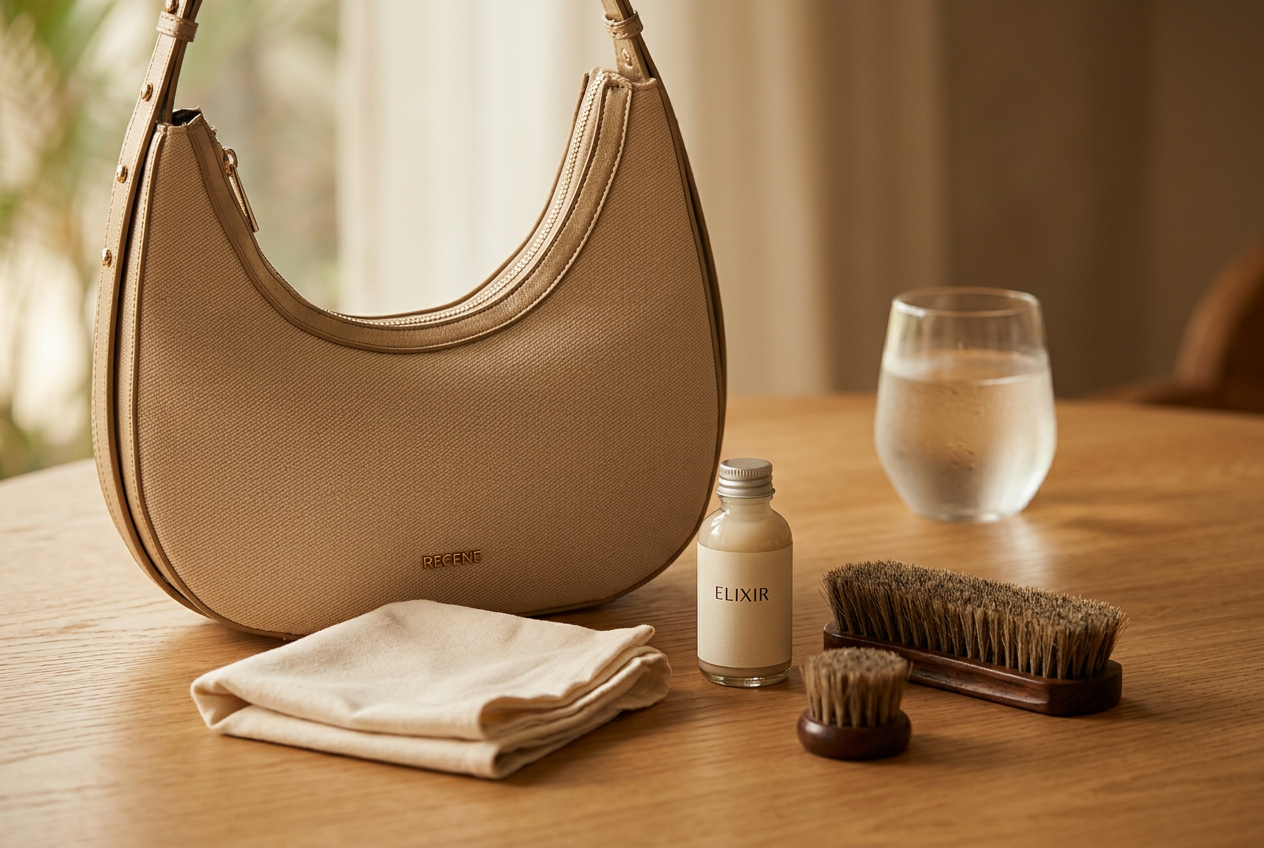
The daily habit
After every wear, wipe the exterior with a soft dry cloth — microfibre or an old cotton t-shirt is perfect. This removes the day's dust and salt from your hands before it settles into the grain. Never use tissue paper; the fibres scratch.
After a rainy day
Pat the bag dry with a soft cloth — do not rub, which pushes moisture into the leather. Stuff it lightly with dry cotton or the original filler paper to keep its shape, and leave it in a well-ventilated room away from direct sunlight or air-conditioning vents. Never place a wet leather bag inside a plastic bag or a closed cupboard — that is how mildew starts.
Storage — where most bags die
Store every leather piece in its dust bag with a bit of space around it. Silica gel packets (the ones that come in shoe boxes) keep humidity down inside the storage cupboard. If a piece will not be used for a month or more, take it out every 2–3 weeks just to air it — closed storage without air movement is the enemy.
Cleaning stains
For water spots or light dirt, use a slightly damp (not wet) cloth, dab gently, then dry immediately. For oil-based stains, do not rub — sprinkle cornstarch on the spot, leave for 30 minutes, brush off gently. For anything more serious, contact us before trying home remedies from the internet; many of them strip the finish.
Shoes — the extra step
Rotate at least two pairs. Leather shoes need 24 hours to fully dry from a day's wear, and Malaysian humidity extends that. A cedar shoe tree (or crumpled newsprint in a pinch) absorbs moisture and holds shape overnight.